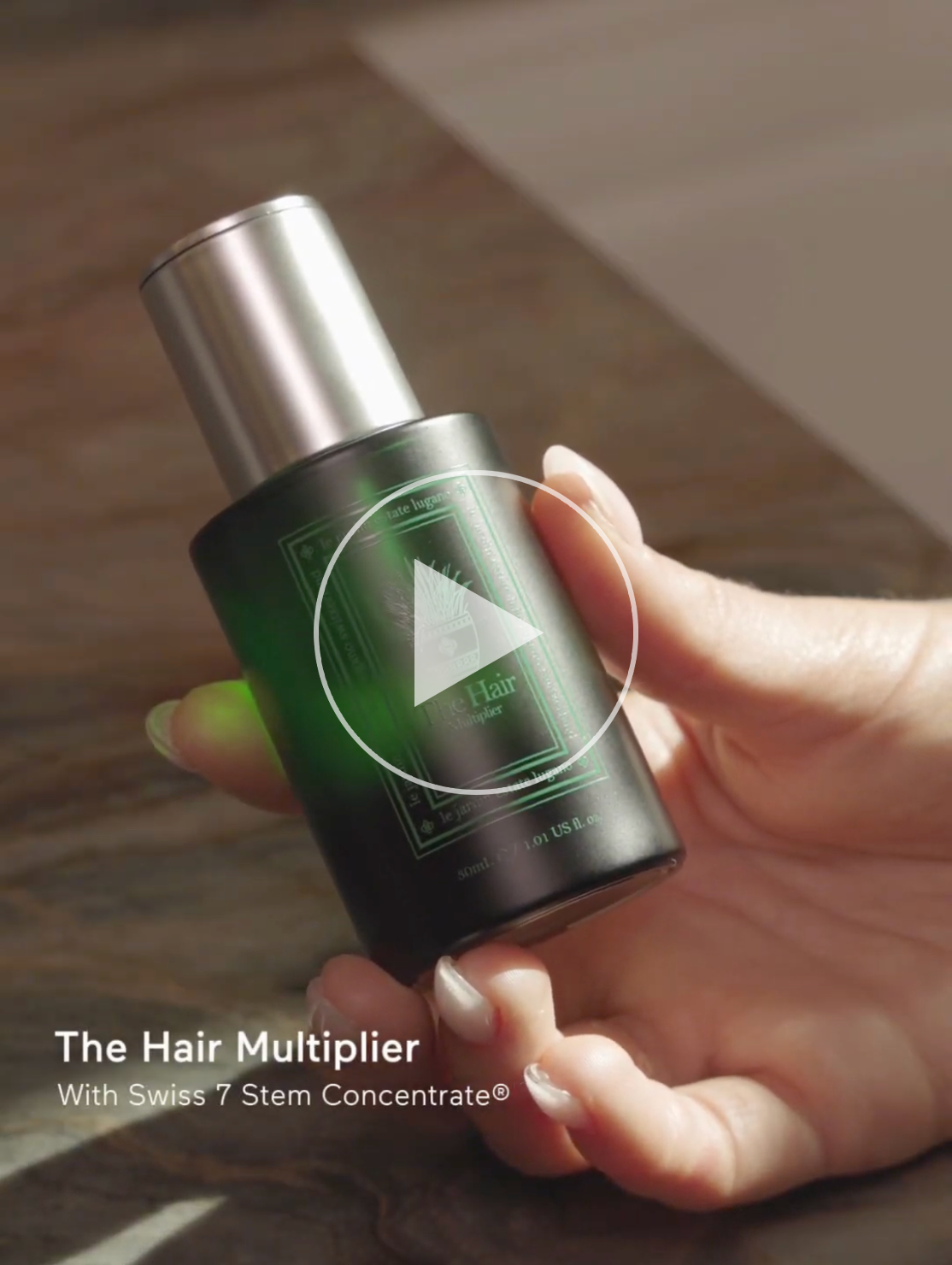
The Cycle · Seasons
Everyone Sheds in September
Hair follicles keep a calendar. The share of resting follicles peaks in midsummer, and because rest lasts about a hundred days, the shedding that follows lands in autumn. Almost everyone notices. Almost nobody knows it’s on a schedule.
See Why It Happens A 2 minute read before you panic-buy anything.
It usually starts in the shower, sometime in early September. More hair around the drain than you remember from July. Then it’s the brush, then the pillowcase, then the elastic that comes away fuller than it should. By the third week you’re photographing your own part in the bathroom mirror, trying to decide whether it looks wider than it did in June.
If that’s you right now, here is the sentence to hold onto: for most women, nothing has gone wrong. Something has arrived on time.
Why is my hair falling out more in September?
Every hair on your head runs its own clock, cycling through three phases. Anagen is active growth, and it lasts for years; this is where most of your hair lives most of the time. Catagen is a short transition of a couple of weeks. Telogen is rest: the strand stops growing, stays anchored for roughly a hundred days, then lets go as a new hair pushes up behind it.
That release is shedding. It is the scheduled end of a completed cycle, not damage. And it happens about three months after the follicle decided to rest.
Which is the whole story, once you know one more thing: follicles don’t spread those rest decisions evenly across the year.
You can see the pattern in the search data. Queries like “hair falling out female” and “hair shedding” climb every September and October, in both hemispheres, six months apart. Dermatologists have a name for the seasonal version: a mild, self-limiting form of telogen effluvium, the medical term for a synchronized wave of resting hairs letting go.
Illustrative shape, drawn from published research on seasonal hair cycling in healthy adults. Individual timing varies with latitude, hemisphere and personal factors. The lag between the two curves is the point, not the exact months.
Skip ahead: the window this shedding opens →
Why summer sets it up
A long-running Swiss study that followed healthy women for several years found the proportion of resting follicles reaches its annual high in summer. Work analyzing global searches for seasonal hair loss and “fall hair loss” found the same shape, peaking in late summer and autumn.
Why summer? The honest answer is that it isn’t fully settled. Daylight length is the leading candidate: the same photoperiod signal that schedules coat shedding in other mammals, still running quietly in us. Ultraviolet exposure and summer heat stress on the scalp probably contribute. What isn’t in dispute is the timing of the consequence. Whatever happens in July becomes visible in September.

How much shedding is normal
The commonly cited figure is 50 to 100 hairs a day, and it’s a reasonable order of magnitude but a poor daily target, because what you actually see depends on how often you wash. Wash daily and you’ll see a little each time. Wash twice a week and three days of shedding arrives at once, in your hands, which is why washing less can feel like shedding more.
A better habit than counting: watch the direction over weeks, not the volume on one alarming morning. Autumn hair shedding rises, plateaus for a few weeks, and settles. It’s diffuse, spread across the whole head rather than concentrated in one spot. And it stops.
Seasonal shedding is common and self-limiting. These signs point somewhere else and deserve a dermatologist’s opinion rather than a new product:
- Shedding that continues past roughly three months, or doesn’t settle by winter
- Loss concentrated in patches, or a receding hairline, rather than diffuse thinning
- Scalp pain, burning, itching, flaking or visible inflammation
- Shedding alongside fatigue, weight changes, or a new medication
- Postpartum hair loss follows its own timeline, usually starting two to four months after delivery, and typically resolves on its own; mention it to your doctor if it passes the one-year mark
A blood panel and ten minutes with a dermatologist rule out the things no serum can address.
The window nobody uses
Here is the part worth acting on.
When a follicle releases its resting hair, it doesn’t shut down. It re-enters growth, and the new strand starts pushing toward the surface within weeks. So autumn is not only the peak of shedding. It is also, at the same time, the largest cohort of follicles restarting a growth cycle all year.
Those follicles will build their new hair in whatever conditions your scalp offers them. Depleted, dehydrated, inflamed and ignored, or calm, hydrated and supplied. The difference doesn’t show up in October. It shows up around the turn of the year, in how much of the new growth comes through and how sturdy it is.
Which means the usual September reflex runs exactly backwards. Panic, buy something, use it for three weeks, watch the shedding continue, and quit right before the window opens. Of course the shedding continued. It was committed months ago.
If you’ve been searching how to stop hair shedding this month, the honest answer is that you mostly cannot stop a shed that was scheduled in July. What you can decide is what the next cycle grows back into. And that decision has a deadline: a follicle that restarts in September builds its new strand in September’s conditions, whether you changed them or not.
What a September scalp actually needs
Whatever you choose to use this autumn, hold it to three tests. It should be gentle enough to apply every night for three months, because the window is long. It shouldn’t depend on drugs or hormones, because a seasonal shed is not a disease. And it should aim at the growth phase itself, because that is the phase your follicles are entering right now.
Those three tests are the brief Le Jardin Switzerland formulates to. The Hair Multiplier is a lightweight hair growth serum for women, built around the growth cycle rather than against it: a few drops pressed into the scalp at night, absorbed in seconds, no rinse, no residue. Several reviewers describe the texture the same way: it feels like water.

The formula centers on the Swiss 7-Stem Concentrate: seven alpine botanicals grown at altitude, led by Matterhorn edelweiss. In independent clinical research published in Experimental Dermatology (2022), follicles treated with edelweiss extract stayed in their growth phase significantly longer and produced more hair shafts. That is the mechanism that matters in autumn: not forcing dormant follicles awake, but helping the ones already restarting to stay in growth.
It’s also what the formula leaves out. This is a hair growth serum without minoxidil: no drugs, no hormones, no synthetic fragrance, which is why it’s safe for sensitive scalps and simple to layer into whatever routine you already have. For anyone looking for a natural hair growth treatment for women that a dermatologist wouldn’t raise an eyebrow at, the ingredient list reads like a hike above Lugano: edelweiss, amaranth seed, larch wood, green tea.
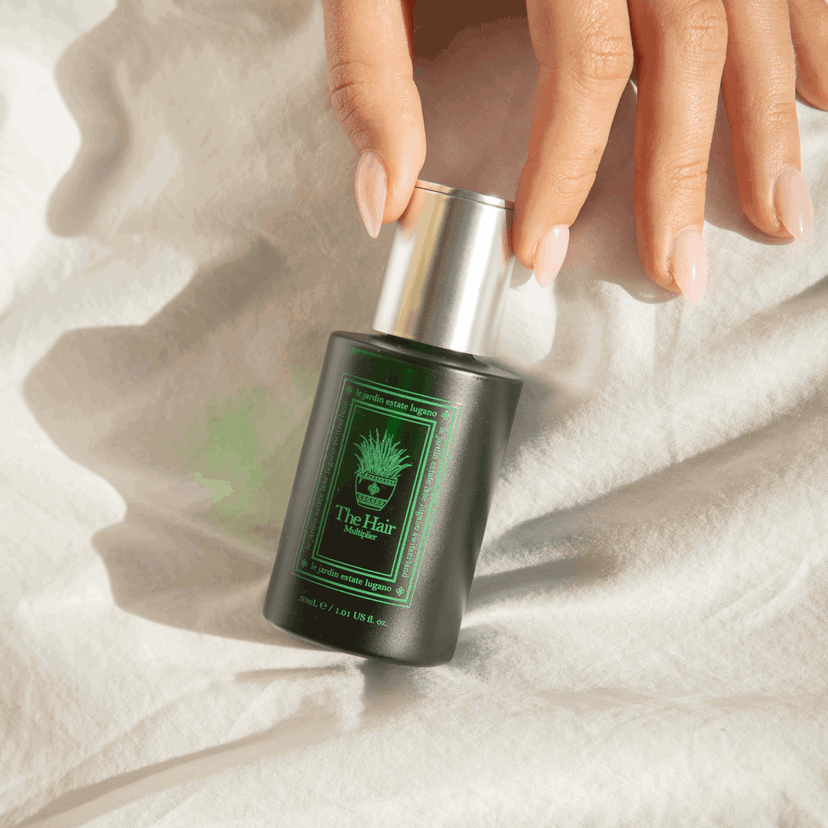
The brand’s guidance for the first month is specific to this window: a double dose nightly in month one, while the post-summer restart is at its peak, then a single dose from month two onward.
What 12 weeks looks like
86%
reported a reduction in hair shedding and breakage by week 4
90%
saw an accelerated increase in hair length by week 12
96%
reported a visible increase in hair density and overall fullness by week 12
Based on a self-reported 12-week consumer-use survey of 80 participants using The Hair Multiplier twice daily. Individual results may vary.
The timeline in those numbers matches the biology: shedding settles first, density shows up around month three. Start in early September and month three lands with the new year.
The two-month mark, in their words
From the 1,600+ verified reviews on the brand’s site, the same timeline keeps appearing.
“Around two months in, my part looked narrower. The hair fall had decreased considerably by then. Fuller overall now. Repurchasing.”
Beth F. · Verified buyer
“Around month three the change was clear. Drain catches far less now and my ponytail is noticeably thicker than when I started.”
Nicole L. · Verified buyer
“Postpartum hair loss hit me harder the second time around… shedding came way down and the fullness returned enough over a few months that I stopped trying to hide it. The cost per bottle is my main complaint. But my hair finally feels like mine again.”
Kelly T. · Verified buyer
“The results are real, but I keep wishing it smelled like something. Around the six-week mark I started seeing less hair on my pillowcase and in the shower drain, and by month three my hair had more body at the roots.”
Denise C. · Verified buyer
Individual results may vary.
The Autumn Protocol
One bottle starts the window


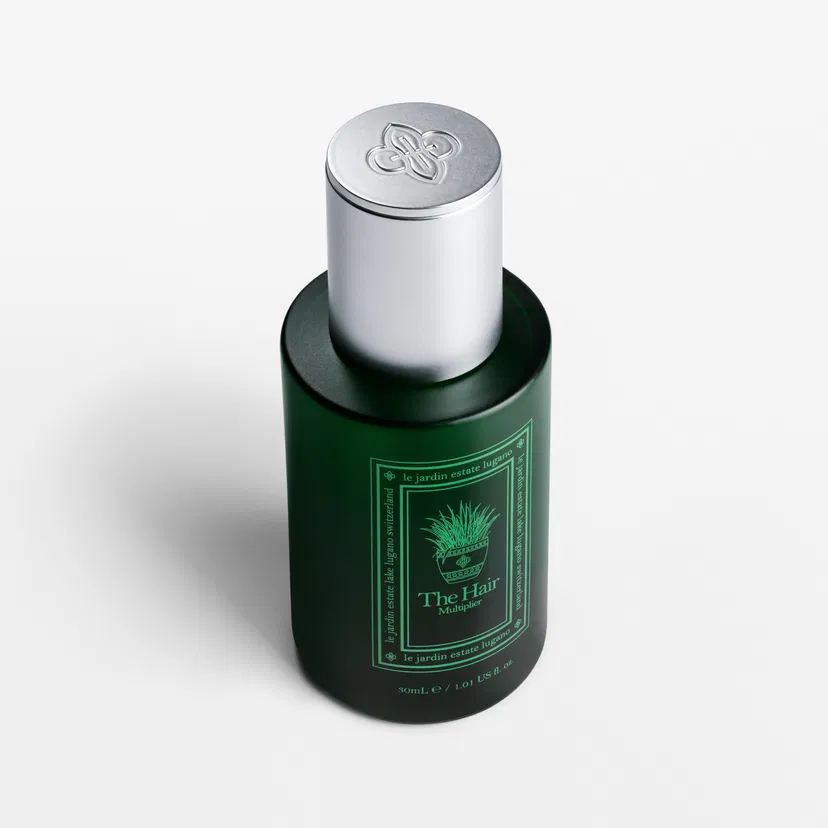
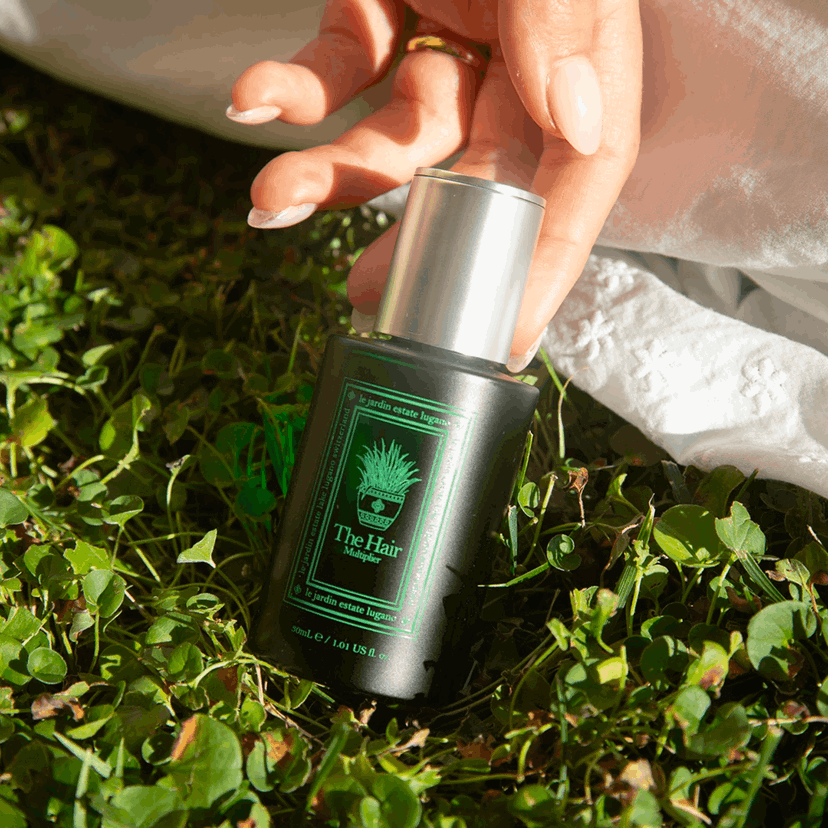
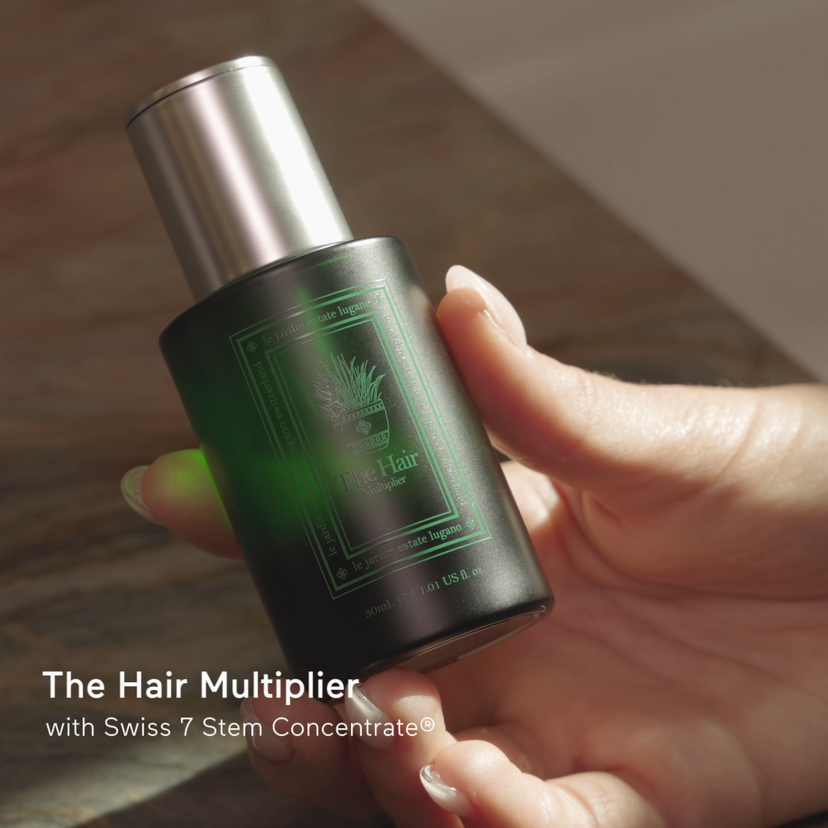
If this article describes your September, you don’t have to commit to the whole window upfront. Start with a single bottle: a one-time purchase, one month of nightly use, no subscription, nothing recurring. That is about three dollars a day for the month the rest of the season builds on. If the drain looks different by week four, the way 86% of surveyed users reported, you continue. If it doesn’t, the guarantee has you covered.
The Hair Multiplier · 30mL
- One month of the Swiss 7-Stem Concentrate serum, applied nightly
- Drug-free and hormone-free; safe for sensitive scalps
- One-time purchase: no subscription, nothing to cancel
- 120-day money-back guarantee: if you see no visible improvement, you get a full refund. No return shipment required.
one-time purchase · one 30mL bottle
Follicles restarting now finish their first growth cycle around New Year. Start this week and January is the date you judge it by.
Start My 90-Day Window 4.9 across 1,600+ verified reviews · 120-day money-back guaranteePrefer to buy the full window at once? The 3-month supply and subscription options are on the product page.
Sensible questions
How do I know it’s seasonal shedding and not something else?
Seasonal shedding is diffuse, starts in late summer or early autumn, and settles within roughly two to three months. Shedding that is patchy, painful, or still climbing by winter deserves a dermatologist visit, not a serum. The checklist earlier in this article is a good starting point.
Is this telogen effluvium? Should I be worried?
The autumn pattern is a mild, self-limiting version of the same mechanism: a synchronized wave of resting follicles letting go. True telogen effluvium triggered by illness, surgery, medication or severe stress is usually heavier and needs a medical review. If in doubt, see your doctor. This article is general information, not a diagnosis.
When would I actually see results?
In the brand’s 12-week consumer survey, most users reported shedding and breakage settling within the first month and visible density around month three. Individual results vary, which is exactly why the guarantee runs 120 days: long enough to cover a full cycle.
How is this different from minoxidil?
Minoxidil is a drug, and for some women a dermatologist will recommend it; that is a conversation worth having. The Hair Multiplier takes the other route: a drug-free, hormone-free botanical formula you can use nightly without a prescription and without the greasy texture, and one you aren’t committed to indefinitely. Many readers reach for it because they want to try the gentle option first.
I’m searching for the best hair growth serum for thinning hair. Is this it?
“Best” depends on the cause of your thinning, which is why we won’t claim it. What we can tell you: the hair thinning women notice each autumn is mostly cyclical, this formula is built for that cycle, it holds a 4.9 average across 1,600+ verified reviews, and the 120-day guarantee exists so you can judge it on your own head rather than on anyone’s promise.
Can I use it with color-treated hair, extensions, or a sensitive scalp?
Yes. The formula is water-based and free of sulfates, parabens, phthalates, synthetic fragrance and dyes. It is extension-safe and formulated for sensitive scalps. It goes on the scalp, not the lengths, so color isn’t affected.
Does it help with postpartum shedding?
Postpartum hair loss runs on its own hormonal timeline and usually resolves naturally; nothing topical will rush that. Where reviewers mention it helping is in the recovery phase, supporting the regrowth once shedding slows. If postpartum shedding is severe or lasts past a year, involve your doctor first.
We publish this piece every autumn because the same panic arrives every autumn, and the same window closes unused. Come January, this season’s follicles will show you what they were given: either three months of the right conditions, or three months of worry and nothing else. Whichever you choose, judge it then, not in week three. If you want the serum we formulate for exactly this window, it starts at one bottle, no subscription.